AI WebTerminal Management System- Create the next civilization -
BUILD · CHECK · PROTECT
Strengthen security with AI.Your creative power can also protect.
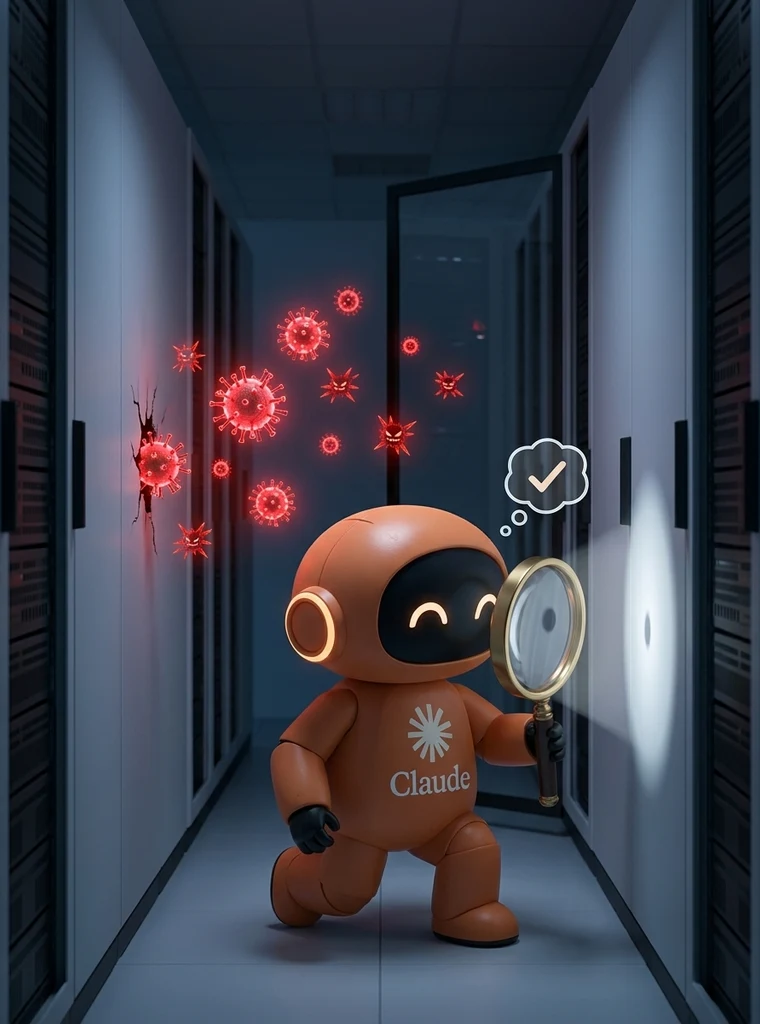
Inspect, seal the holes, and verify again. This is an image of collaborative work by multiple AIs, likened to building a protective wall.
Let AI take over from "where should I look?" Multiple AIs, including Claude, ChatGPT, and Gemini, share the same memory and files to carry out checks, fixes, and re-verification.
All you need to say is this.“Run a security check on this entire server.”
AI checks ahead for issues you hadn't even thought to look for.
Are too many ports open? Is the login method secure? Are any outdated software packages still installed? Even if you don't know what to check, the AI looks through the server, picks out the dangerous spots, explains them in plain language, fixes them, and then verifies the fixes again.
Traditional security measures
You had to know where to look (ports, login methods, settings, etc.)
Scan tool results are long lists of English warnings, and people must decide which ones are actually dangerous
The fixes and the confirmation that they worked are also done by hand
Hiring a specialist company costs both money and time
With BASECORD
Just ask once, and the AI figures out on its own what is running and where it could be breached from
Picks out the truly dangerous spots based on how the server is used and explains them in plain language
Backs up first, applies the fix, and carries through to re-checking that it worked
Another AI reviews the work too, reducing blind spots
Self-review by a single AIIt is hard to notice holes caused by your own assumptions in the code you wrote, or holes in your blind spots.
BASECORD cross-checks with multiple AIsA different AI inspects from a different angle, closing holes and completing a re-check.
This image contrasts the idea of self-review by one AI with cross-checking by multiple AIs.
Example request
"Before publishing this app, have another AI check for exposed personal information or keys and potential security vulnerabilities, and fix any issues."
Sharing the same workspace and memory enables five layers of protection.
Beyond giving advice, this takes advantage of direct access to the actual files and server settings.
POINT 01
"Cross-checked by an AI other than the one that built it (reducing blind spots)"
Developing and reviewing with only one AI leaves you blind to your own code's assumptions and oversights. With BASECORD, one AI's code is strictly reviewed from a different perspective by another AI, catching security holes in layers and reducing oversights. Because they share the same memory and files, there's no need to re-explain anything.
POINT 02
Not just "point out and leave it": fixing, then re-inspecting, all completed on the spot
A regular chat screen only advises, "This might be dangerous." BASECORD's AI directly fixes the code and settings on the server and, after the fix, runs tests itself to confirm the hole is actually closed and the original functions haven't broken.
Before publishing, we check in one batch with inspection programs and the AI's eyes for names, addresses, and school names in test data, forgotten API keys, links to admin pages, and paths where external malicious input (such as XSS) could make the program run.
POINT 04
AI directly configures and operates Linux server defense tools
Server protections that normally require specialized knowledge, such as automatically blocking detected unauthorized login attempts (fail2ban), virus scanning (ClamAV), communication encryption (SSL certificates), and narrowing access permissions, can be set up simply by asking the AI in plain words.
Dedicated Server PlanPOINT 05
24-hour monitoring and automatic backups to prepare for the worst
By combining scheduled jobs (cron) and resident monitoring (systemd), you can have the AI build systems that detect abnormal access and capacity shortages, check certificate renewals, and create generational backups of databases and files. You can build a setup that not only "prevents attacks" but also "lets you restore immediately if something goes wrong," all in one consistent system.
Dedicated Server Plan
Don't stop at fixing. Systems that keep defenses running can also be built with AI.
These are examples of defenses actually built and operated using BASECORD.
Carry problems you've found into your next development
Discovered problems and inspection procedures are kept in shared memory and instruction notes. The AI building the next project, or a different AI, follows the same precautions from the start.
Watch that fixed defenses aren't lost in later updates
Change history is recorded automatically, and important fixes are marked. Even if an old version is restored later, you'll notice when the marker is missing.
Don't leave warnings unattended
Warnings arriving from multiple servers are gathered in one place, and their status is recorded as "awaiting action," "fixed," or "no action needed." It doesn't just notify you; it tracks each one through to resolution.
Check that you actually have backups
The AI also verifies whether any data is missing from backup targets or whether any backups are corrupted partway through. There are actual examples of finding and fixing missed items and corruption.
Protect not just code but also business workflows
For an online store system, we found and fixed issues in the payment confirmation flow and places where double-selling of inventory could occur. Business incidents can also be included in inspections.
* The above are examples of systems built and operated using BASECORD. They are not features that run automatically on every plan from the start. Monitoring and scheduled jobs that run continuously can be built on the dedicated server plan.
Going from review to fix in actual production work too.
Under "Production List," the Renovate Simulator: while reviewing the display process for imported furniture data, we found a problem where malicious programs could run. We added a fix that displays furniture names as safe characters and added checks on imported content, then confirmed the fix with test data. For the "Junior High School Exam Prep App" and the "Picture Book," we also ran a batch check before publishing to confirm that no school names, personal names, or addresses remained, and removed them.
STEP 01InvestigateCheck the scope of publication and find problematic processing or information leaks.
STEP 02FixKeep a backup of the original before changes, and directly fix the necessary parts.
STEP 03TestConfirm the problem is resolved and the original functionality works, using safe reproduction tests.
STEP 04ReviewRe-check from a different AI's perspective and record the scope of verification.
Power to build, and power to protect. A workspace that has both.